What do you really want & how do you know you are right?
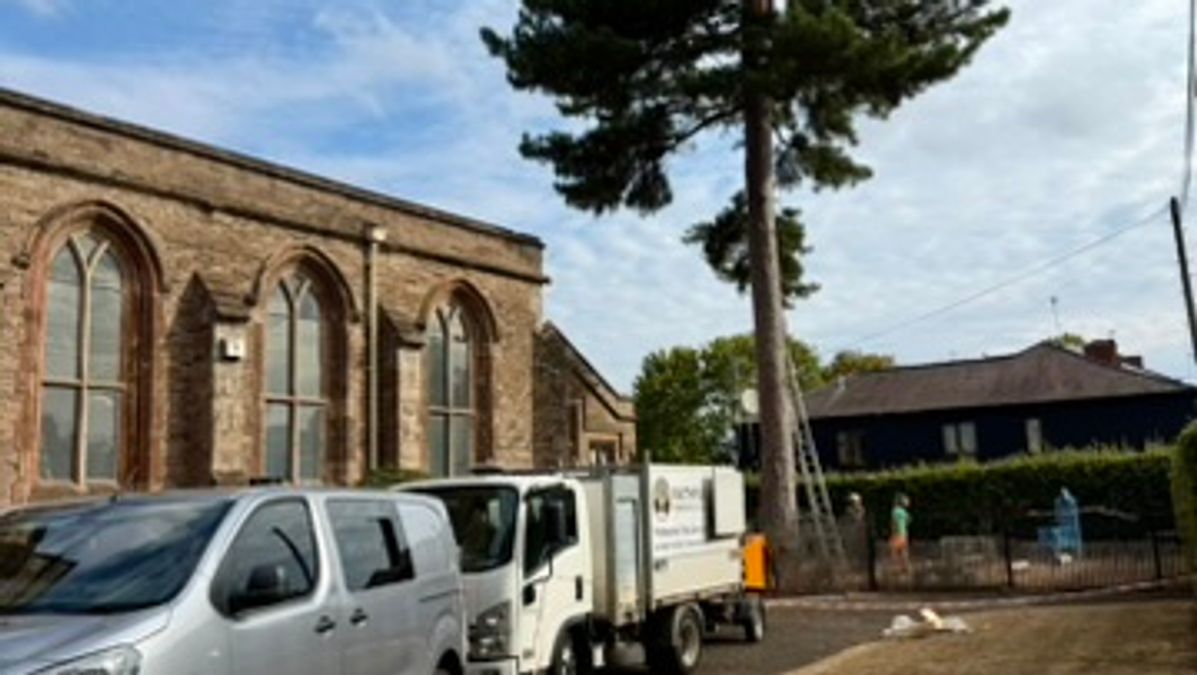
That thought occurred to me yesterday while I was standing underneath two tree surgeons, about 80 feet up an enormous tree, with chainsaws. Although, to be fair, that wasn’t my first thought. My first thought was: these two are completely bloody nuts.
We’ve got some work going on at a site, including an enormous old tree at the front. A Scottish spruce, I think. I could be wrong. My knowledge of trees extends roughly as far as that’s a bloody big one. It’s protected, so you can’t just wander over with a chainsaw and give it a bit of a haircut. It needed people who knew what they were doing.
Enter Tom and Daisy. No cherry picker, no reassuring metal platform, no handrail. They attached themselves to a few ropes and started climbing until eventually I’m standing underneath two people wandering around 80 feet above me with chainsaws, apparently supported by a few bits of string and branches that didn’t look capable of holding a sparrow. They were completely at home. I wasn’t.
But after a while I stopped worrying quite so much about whether somebody was about to land on me and started watching how they worked. It was extraordinary. One moved, the other moved. Somebody on the ground watched the shape of the tree and called things up. A branch came off, the weight changed, a rope moved, and off one of them went to another part of the tree. Almost like watching a symphony. Admittedly, a symphony involving chainsaws and rather more opportunity for an ambulance.
Eventually they came down and I told them how impressive it had been. Then, because apparently I don’t know when to leave a compliment alone, I added, “But you’re both completely nuts.”
Apparently not. Scaffolders are nuts. Roofers are nuts. And those people who build skyscrapers hundreds of feet in the air? Completely bloody bonkers.
Hang on. You’re standing 80 feet up a tree, on something that looks like a twig, attached to a rope, while somebody else is cutting bits off the thing you’re standing in… and they’re nuts?
Apparently, yes.
I walked away laughing, but the conversation stayed with me because we’d been looking at exactly the same tree. I saw danger. They saw work. I saw a branch that might snap. They saw somewhere to put their foot. I saw a rope which, personally, I would have preferred to be approximately the thickness of a telegraph pole. They knew exactly what it could hold.
So which of us was seeing the tree properly?
And that’s where my brain wandered off, because we do this all the time, don’t we? We look at what’s familiar and call it safe. I’ve certainly done it. Jobs, relationships, decisions, saying yes when actually I’d rather say no. Staying with something because, even though I don’t particularly like where it goes, at least I know where it goes.
And then other people get involved, which complicates things enormously.
I was severely bullied at school, and when you’re in that sort of environment you become pretty bloody good at reading the room. Who’s safe? Who isn’t? What version of me works here? What do I need to do to avoid becoming today’s entertainment?
I remember struggling terribly with handwriting. I was left-handed, ink everywhere, and I’d look at some of the other children’s beautiful neat writing and wonder why they could do something that seemed completely beyond me. Then one day I’d really tried. The teacher looked at my work and announced to the class that it resembled the last dying moments of a spider crawling across the page.
Everybody laughed. Quite a good line, actually, unless you’re the spider, because that was my best. And something in me basically went: Fuck it. Why bother?
I’m not suggesting one teacher and one sentence determined the rest of my life. Of course it didn’t. But how many of those little moments do we collect? A look, a laugh, somebody’s disappointment, approval when we get it right, rejection when we don’t. Nobody has to formally tell us who we are. We’re quite capable of working it out from the audience.
And perhaps we don’t stop doing that when we become adults. We just get better clothes and slightly more sophisticated audiences. We become the successful one, the dependable one, the strong one, the funny one, the one who always copes, the one who says yes.
Here’s the bit I’d never really thought about. Other people get used to that version of us too. If I’ve been one person for twenty years, the people around me know who they are in relation to me. Then I move. I say no. I stop rescuing everybody. I decide the thing everybody thinks I’m brilliant at doesn’t actually make me happy.
Suddenly I’ve moved their furniture as well as mine.
And somewhere in all of that I started wondering: how much of what I thought I wanted was actually what I wanted, and how much was simply the price I’d learned to pay for belonging?
That’s quite an uncomfortable question when you actually sit with it. And then my brain went somewhere else. Resilience.
We’re forever talking about people lacking resilience, not having enough motivation or enough energy to change. I’ve said it myself: I haven’t got the energy for that. But hang on. How much energy does it take not to change?
Think about somebody who’s hated their job for ten years. They get up every morning, get dressed, drive there, manage the frustration, bite their tongue, come home exhausted and recover just enough to do the whole bloody thing again tomorrow. And tomorrow. And tomorrow. For ten years.
Then we say they haven’t got the resilience to change.
Really?
They’ve just demonstrated an extraordinary amount of it.
Maybe the resilience isn’t missing. Maybe it’s occupied.
Maybe we’re using huge amounts of resolve, stubbornness and sheer bloody-mindedness just to keep everything where it is. Which completely changes the question. Perhaps I haven’t got to find some enormous new source of strength. Perhaps I’ve already got a bloody great power station. I’ve just connected most of it to keeping yesterday running.
That took me, slightly randomly, to the Hero’s Journey and the Refusal of the Call. The opportunity appears, something invites the hero beyond the familiar world and they say no. We tend to think that’s the bit where nothing happens, except they’ve made a choice.
Which brought me, slightly inevitably if you know my taste in music, to Rush. Neil Peart put it rather better in Freewill: “If you choose not to decide, you still have made a choice.”
There it is. Standing still isn’t necessarily the easy route. It might simply be the route you’ve walked so many times that you no longer notice how much effort it takes.
And somehow I’m back underneath that bloody tree.
Tom and Daisy weren’t trying to be courageous. They knew the ropes, the branches and each other. What looked completely insane to me was simply familiar to them. Maybe we do exactly the same thing with our own lives. We look at what we’ve always done and call it sensible. We look at something unfamiliar and call it risky. We look at the person we’ve spent years becoming and assume that’s simply who we are.
Maybe it is. But maybe some of it is who we needed to be. That’s not quite the same thing.
I’m not suggesting we should all resign from our jobs, leave our partners, sell the house and disappear to Nepal because we’ve suddenly discovered our authentic selves. God help us. People matter. Responsibilities matter.
But surely there’s somewhere between keeping everything exactly as it is and setting fire to the lot. Somewhere we can stand back far enough to see the whole tree rather than just the branch we’ve got used to standing on.
And maybe, from there, hear ourselves clearly enough to ask:
What do I actually want?

Richard Elwell
Executive & Leadership Clarity Guide with over 20 years of experience helping leaders, teams, and individuals find quiet clarity.
Ready to find quiet clarity in your decisions?
Book a 1-on-1 guided clarity session with Richard Elwell using the visual card process.